
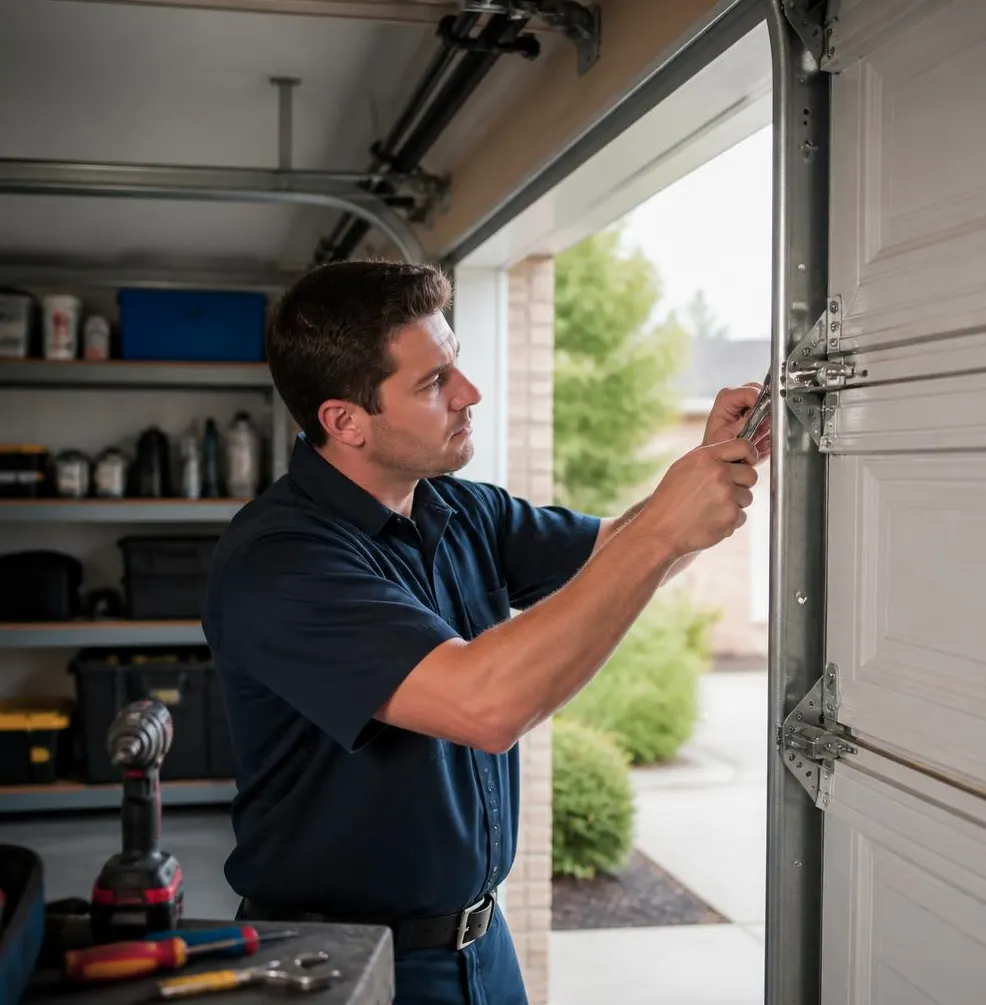
What a Technician Sees on This Call
The call usually starts one of two ways. Either a homeowner wants to add windows to brighten up a garage they've converted into a workshop or gym, or they're calling because the windows they already have look terrible — cloudy, yellowed, or cracked along the edges after a few summers of direct sun. Acrylic window inserts take a beating out here. The UV load bakes the plastic until it turns brittle and amber-tinted, and once it starts cracking, dust and the occasional monsoon downpour find their way into the frame. By the time we're called out, the homeowner usually wants to know if windows are even worth it. The honest answer is: it depends on where the door faces, what's behind it, and what material you choose.
What to Actually Look For
Glass Type, Not Just "Window Kit"
Most entry-level window inserts are acrylic or polycarbonate, not glass. They're lighter and cheaper, but they're also the ones that fog and discolor fastest under constant sun exposure. Tempered glass holds up better long-term and resists the clouding that makes acrylic look dingy after a couple of summers. If you want something that still looks good in five years, tempered glass is worth the upgrade cost.
Insulated (Dual-Pane) vs. Single-Pane
If your garage door itself is insulated, a single-pane window punches a thermal hole right through that insulation. On a west- or south-facing door catching full afternoon sun, that one weak spot can noticeably raise the temperature inside the garage, which matters if you're storing anything heat-sensitive, running a mini-fridge, or spending time out there in the evenings. Insulated glass inserts cost more but keep the door's overall performance closer to its rated value.
Placement and Orientation
Where the window sits on the door matters as much as the glass itself. Windows placed in the top panel, away from the garage door opener's emergency release cord, don't create an easy reach-in point for anyone trying to pop the release and lift the door by hand. Windows placed low or near the release mechanism are a real security consideration, not a theoretical one. Also think about which direction the door faces: north- and east-facing doors get gentler, more diffused light, while west-facing doors take the brunt of the afternoon sun and will show UV wear on window inserts faster.
Privacy Options
If the garage faces the street or a neighbor's yard, frosted, obscure, or tinted glass lets light in without turning the garage into a display case for your tools, vehicles, or whatever else is stored in there. Obscure glass patterns (like a pebbled or rain-glass texture) are a common middle ground — they diffuse light nicely and still block a clear view inside.
What You Can Safely Ignore
Decorative grille overlays that create a multi-pane look are purely cosmetic. They don't add strength, insulation, or security, so don't pay a premium for them expecting functional benefits — choose them only if you like how they look. They also add more grooves and corners for monsoon dust to settle into, which means more frequent wipe-downs to keep the door looking sharp.
Be skeptical of vague marketing language like "shatterproof" without specifics. Tempered glass breaks into small, blunt pieces rather than shards, which is a real safety feature. Laminated glass holds together even when cracked. "Shatterproof" by itself doesn't tell you which one you're getting, so ask directly.
Questions to Ask Before You Buy
- Is this tempered glass, laminated glass, or acrylic/polycarbonate? Get the actual material, not just the marketing name.
- Is it single-pane or insulated (dual-pane)? This affects both heat gain and your door's overall R-value.
- What's the warranty against yellowing, clouding, or cracking? UV degradation is the main failure point in this climate, and a real warranty should reflect that.
- Can individual window panels be replaced without replacing the whole door section? This matters if one panel cracks from an impact or years of sun exposure.
- Does adding windows change the panel's structural rating? Window cutouts remove material from a steel or aluminum panel, which can be a factor in high-wind conditions during monsoon season.
- How will placement affect the emergency release area? Ask the installer to confirm windows won't sit within easy reach of that mechanism from outside.
When to Call Avondale Garage Door
If your existing windows are cracked, yellowed, or letting in more dust and moisture than they should, that's a straightforward call for garage door repair — often the panel or insert can be swapped without replacing the whole door. If you're planning a new door and want windows designed around your home's orientation and privacy needs from the start, that's where our garage door installation team earns its keep: matching glass type, insulation value, and placement to how your specific garage actually gets used and how much sun it takes on.
If you're in Avondale, Goodyear, Litchfield Park, Tolleson, Buckeye, Glendale, Surprise, or Peoria and you're weighing window options for a new or existing garage door, give Avondale Garage Door a call. We'll walk the door with you, talk through what actually fits your house, and get it done right the first time.